
A dream about a coconut tends to stay with you after you wake up, and it makes sense that you want to know why it showed up at all.

Here is the good part. A coconut carries several different meanings in a dream, and a few of them are far more useful than you would expect from a piece of fruit.
In this post, I will walk you through what dreaming about a coconut can mean, so you can see which reading actually fits you. Let's get into it.
Getting in Is Part of the Deal
Dreaming about a coconut often points to something you want that has a step standing in front of it.
A coconut is one of the few fruits you cannot simply bite into. The water and the flesh are real, but the husk and the shell come first.
In practice, that is the thing you keep circling because of the setup involved, like the form to fill in, the first awkward message, or the dull twenty minutes at the start.
So instead of planning the whole climb, pick one layer of the outside you could get through today. A coconut opens in stages, and so does most of what people call hard.
Some Things Stay Sealed Until You Say So
Not every meaning here is about opening up. A coconut also keeps its water sealed, and nothing reaches it until the shell gives way.
If the coconut in your dream stayed shut, that can be a reading about timing rather than secrecy. Certain plans and opinions are yours to hold until you pick the moment.
That might be an idea you cannot describe well yet, or a decision you would rather announce once it is settled. Holding it in is not the same as hiding.
One question worth sitting with: is the thing you have not shared being held back because you are unsure of the reaction, or because it genuinely is not finished? Those two feel almost identical and lead to very different choices.

Drifting Is Not the Same as Being Lost
Coconuts travel. They float on ocean currents and can sprout on a beach far from the palm that dropped them.
In a dream, that can read as a stretch of being between places, without a firm sense of where you will settle. The floating part is not the failure in the story, it is the transport.
Ordinary versions of this are everywhere: a new city, a new school, a role you took that was never the plan.
Notice too that a coconut arrives with its own water and food for the sprout inside. Worth asking what you already bring into a new setting, rather than assuming everything has to be handed to you once you get there.
The Part You Would Throw Out May Be the Useful One
There is very little of a coconut that anyone throws away. The husk fibers become rope, matting and brushes, the shell becomes bowls and charcoal, and the inside is food and drink.
A coconut in a dream can bring attention to the parts of your own experience you have filed under not relevant. The scratchy outer layer is exactly the one that gets spun into rope.
Pick one thing you would call useless past experience, like a summer job or a hobby that went nowhere. Naming the single piece of it that transfers is more useful than writing off the whole thing.
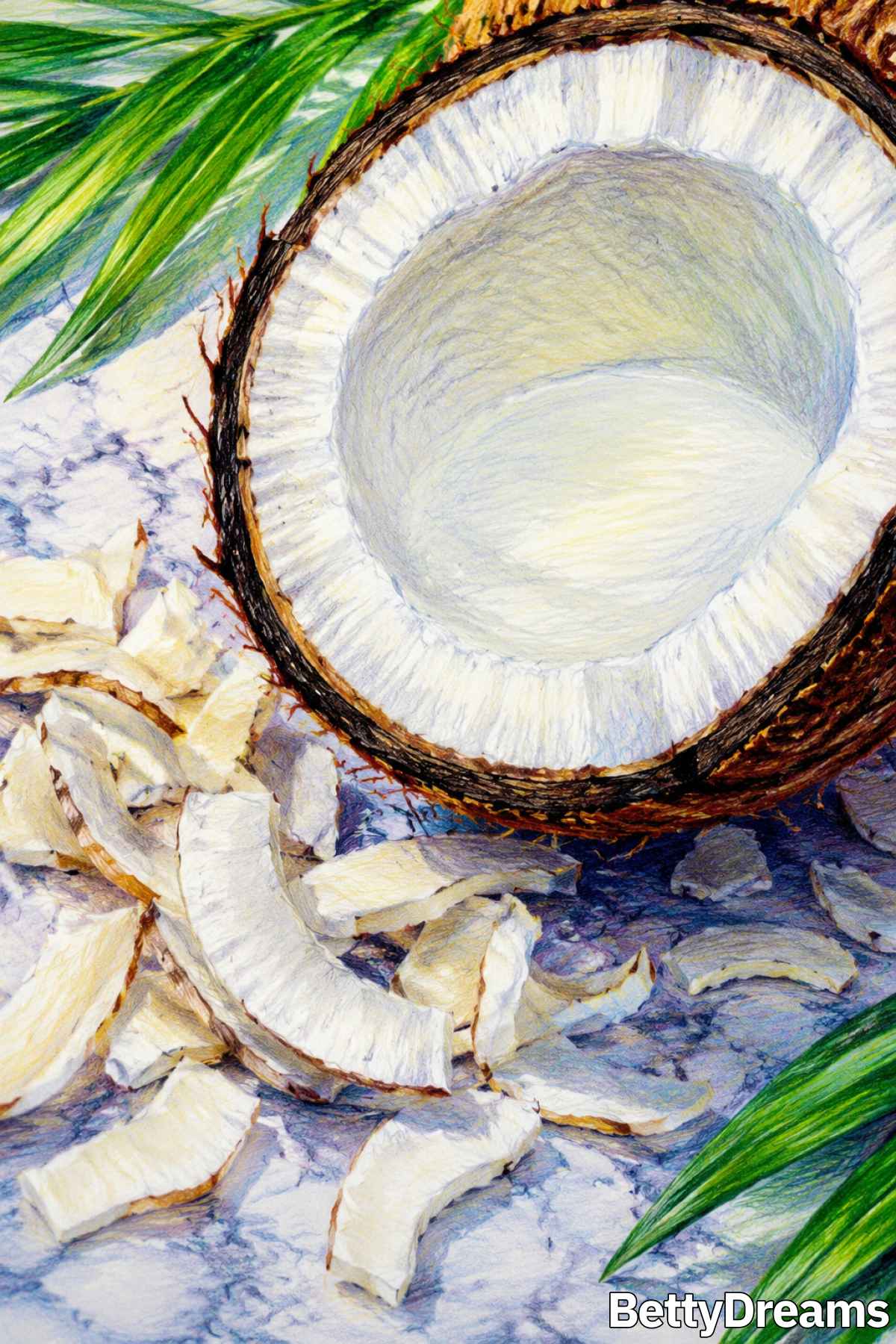
You Do Not Need More Force, You Need the Right Spot
Anyone who has opened a coconut knows that random smashing gets you almost nowhere. Tap around its middle line, or pierce the softest of the three pores, and it gives way with far less work.
That makes a coconut dream a strong candidate for a question about method instead of effort. The issue may not be that you are trying too little.
It shows up in plain ways, like the email rewritten five times when one phone call would have settled it, or the same argument made the same way to the same person.
Take whatever you have been pushing hardest at this month and hunt for its seam: a different angle, a different person to ask, a different hour of the day.
A Long Wait Is Not a Wasted One
Coconut palms are in no hurry. A palm grows for several years before it carries any fruit, and each coconut then takes close to a year to mature.
A dream like this can put a frame around something you began that still shows nothing on the surface. Slow is the normal speed for certain kinds of work, not evidence that you chose wrong.
Rather than checking the result again this week, look at what has quietly been assembled underneath, like the habit, the skill, or the people who now know your name.
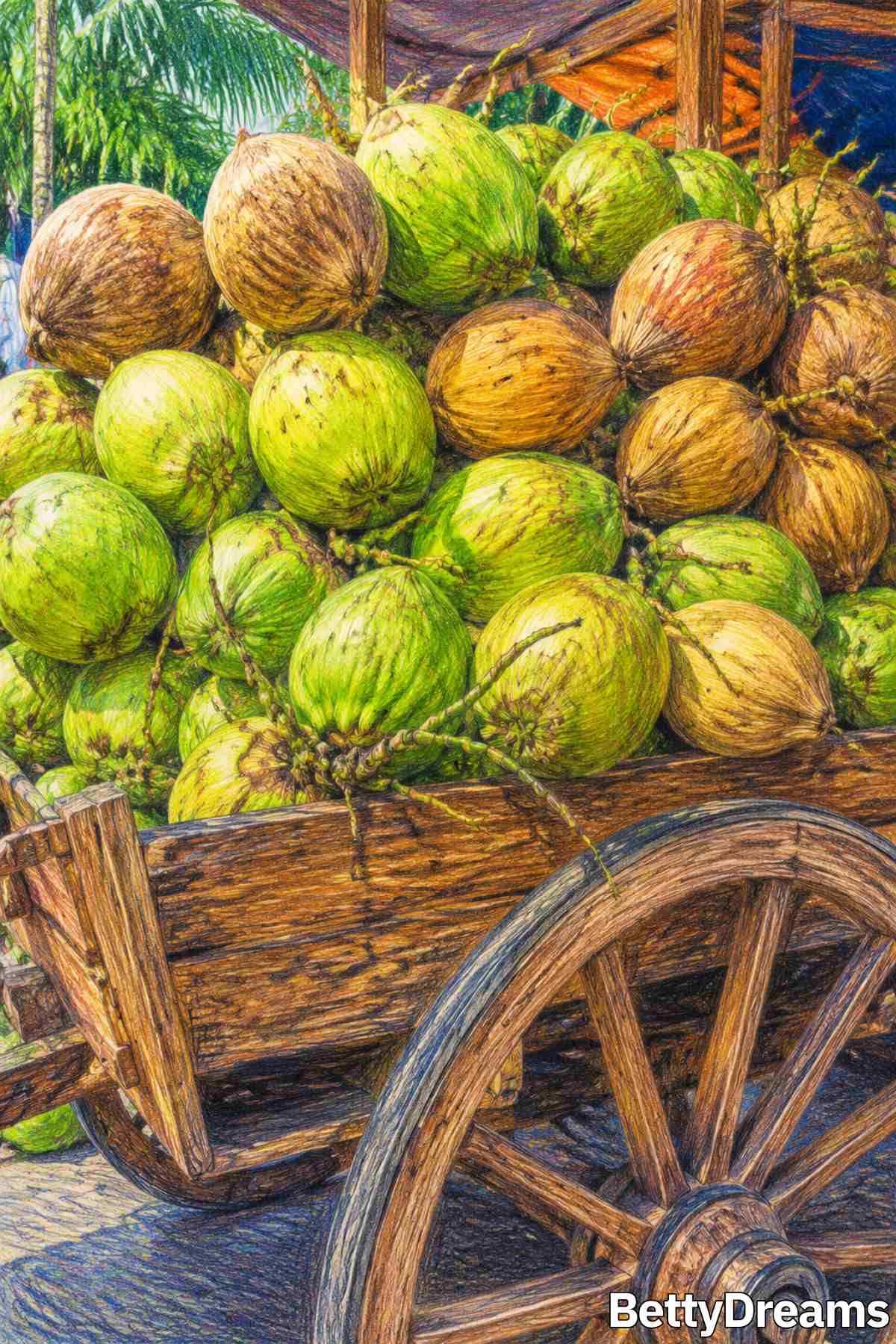
Everyone Calls It a Nut, and It Is Not One
Here is a detail most people never hear: a coconut is not a nut. Botanically it is a drupe, the same group as peaches and plums, a seed sitting inside a hard stone.
So a coconut showing up while you sleep can be about carrying a name that is not quite accurate. The label stuck, and the coconut went on being exactly what it is.
Everyone has a version of this, whether it is the part a group assumes you play or what people guess about you from your job title.
The useful move is to separate the labels that cost you something real from the ones that are only inaccurate. The first is worth correcting, and the second you can leave sitting there.
Bending Is Not Losing
A coconut grows on a tree built to bend. In strong coastal wind the trunk leans a long way instead of holding itself rigid.
That is a fair thing to take from the dream: flexibility is not surrender. The palm moves and keeps its footing at the same time.
If there is a position you are holding stiffly right now, there may be a version where you give ground on the details and keep the part you actually care about.
One Coconut Is More than One Person's Worth
A coconut is not really built for one person. A single one holds more water than most people finish at once, and more flesh than one meal needs.
Dreaming about a coconut can be about what you already have in surplus, like time, information, a contact, or a free hour on a Sunday.
Often it is the answer you found the hard way, the one that would save someone else two days of guessing. Passing it over costs you close to nothing.
Name one thing you know or have that someone near you is currently short of. Handing it across is usually a far shorter move than it looks from the inside.

Some Things Grow Fine Where Others Would Not
If you have ever wondered why coconut palms line so many beaches, it is because they handle sandy, salty ground that plenty of other plants cannot.
A coconut dream can be a nudge to stop grading your own conditions against somebody else's. Ground that looks poor from a distance can suit one kind of growth perfectly well.
So instead of asking whether your setup looks ideal, ask what genuinely does well here. That list tends to run longer than expected.
Important Questions
Was the coconut still closed, or was it already open?
This detail shifts the reading more than most. A closed coconut and an open one sit at two different points of the same story.
If it was still sealed, the dream sits at the stage before access, where something is known to be there but not reached yet. The interesting question becomes the first step, not the result.
If it was already open, attention moves to what you do with it. Fresh coconut water does not last long once the shell is broken, so an open one can be about using what is in front of you instead of saving it for a better day.
Where was the coconut: high on the tree, in your hands, or on the ground?
The position says something about distance and ownership.
High on the palm suggests something still out of reach, the kind of thing that needs a plan or another pair of hands rather than more wanting. That is a stage, not a verdict.
In your hands, it is already yours, and the only question left is what you do next. On the ground or on the sand, something arrived without you chasing it, which makes it worth a proper look at what is already close by.